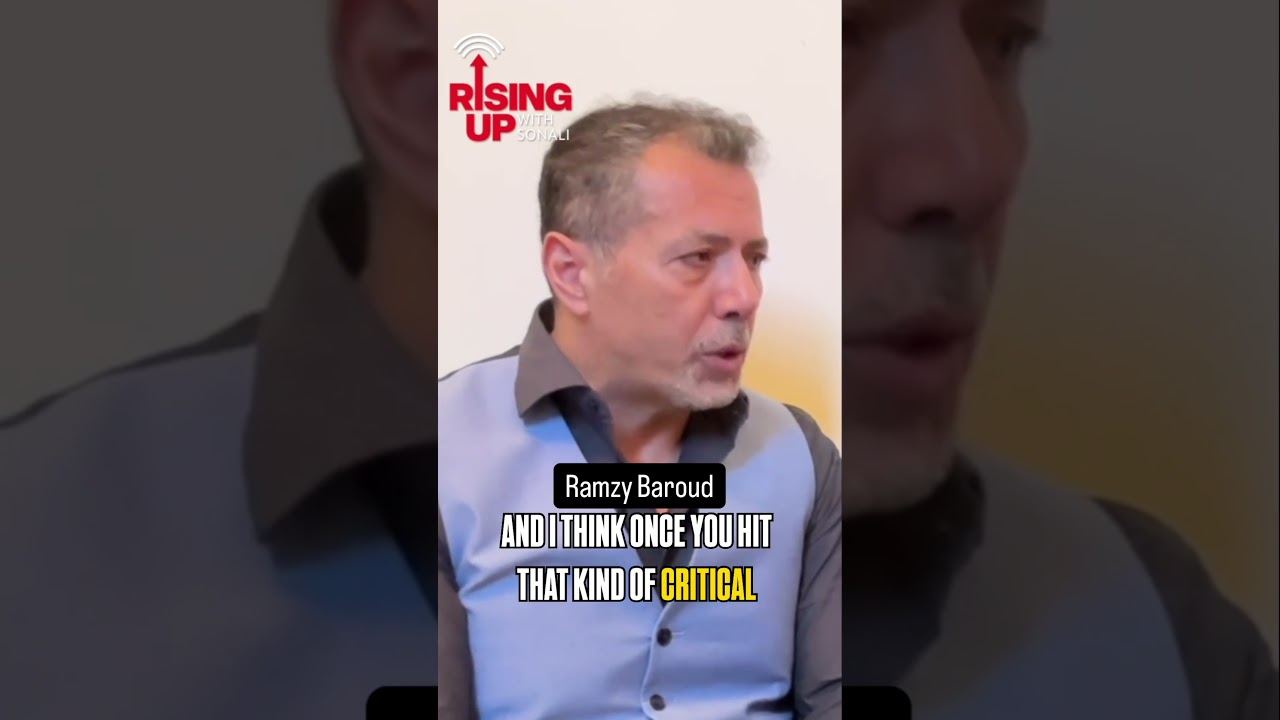
FEATURING RAMZY BAROUD - May 15, 2026 marked Nakba Day, the 78th anniversary of the mass displacement of Palestinians and the formation of the state of Israel. It is a day marked by Palestinians and their allies all over the world, and is particularly important in the wake of Israel’s genocidal war on Gaza since 2023.
Not only were lives and homes lost, but histories. Palestinian author, historian and academic Ramzy Baroud has woven together the history of generations of his own family in one attempt to stitch back together what was lost. His new book is called Before the Flood: A Gaza Family Memoir Across Three Generations of Colonial Invasion, Occupation, and War in Palestine. Publisher’s weekly calls it, “an indelible depiction of the generational trauma that defines the Palestinian struggle.”
Ramzy Baroud has written several books including Searching Jenin, The Second Palestinian Intifada, My Father Was a Freedom Fighter, The Last Earth, and These Chains Will Be Broken. He also co-edited the book Our Vision for Liberation, with Ilan Pappé. Ramzy headlined a recent event organized by KPFK Pacifica Radio in Los Angeles called Sumud and Sonali Kolhatkar had the chance to sit down with him to discuss his newest book.
ROUGH TRANSCRIPT:
Sonali Kolhatkar: You're here at KPFK in Los Angeles to promote your new book. It's called "Before the Flood: A Gaza Family Memoir Across Three Generations of Colonial Invasion, Occupation, and War in Palestine." What do you mean by Before the Flood? What is the flood in this context?
Ramzy Baroud: Right. So let's talk about the flood, and then we'll talk about the before part. The flood is what happened October 7th, what we call in Arabic, Tufan al-Aqsa, Al-Aqsa flood. But that moment in history, although very critical and important for any relevant analysis on the genocide, but we also need to talk about the before part.
And where does that “before” start? Is it the Israeli siege on Gaza? Is it the successive Israeli wars on Gaza, or is it something else? And the book kind of confronts that question, confronts that something else, and it takes us back to about three, four generations of a family that largely perished during the genocide.
I trace the history of that family to the very, very beginning. It happened that that family is my family as well. But in a sense, it's also every Palestinian family.
This post is for paying subscribers only
Sign up now and upgrade your account to read the post and get access to the full library of posts for paying subscribers only.