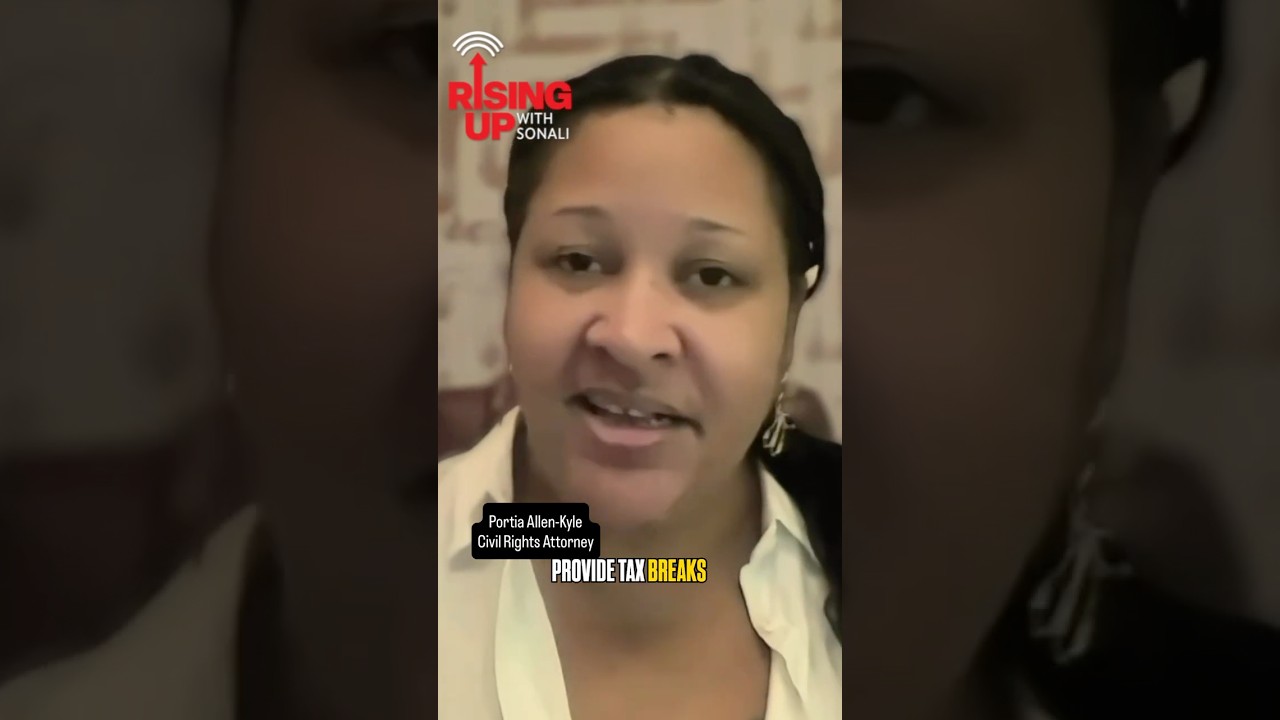
FEATURING PORTIA ALLEN-KYLE - What does the nation’s tax code have to do with the US’s 250th anniversary? It turns out, quite a lot.
How we collect and distribute our collective resources remains trapped in a familiar, unjust pattern. Civil rights attorney and racial justice leader, Portia Allen-Kyle writes in a new story, “a fairer [tax] system could help repair the fractures of American democracy.”
Portia Allen-Kyle is a nationally recognized civil rights attorney, a tax fellow at the Roosevelt Institute, and the former interim executive director at Color Of Change. She is the author of the recent Dame Magazine piece, "The Tax Code America Needs for the Next 250 Years" and of the forthcoming book, From Write-Offs to Riches: How Tax Policy Perpetuates the Racial Wealth Gap and Undermines Our Democracy, to be published under The New Press. She spoke with Sonali Kolhatkar about why the nation's tax code is linked to democracy.
ROUGH TRANSCRIPT:
Sonali Kolhatkar: When we think about taxes, often in our popular culture, people think of it negatively, right? They don't like the fact that their paychecks get shortened, that they have to get gouged at the grocery store because their bill is higher than they expected because of sales tax. All sorts of taxes that are collected from ordinary Americans, we have a negative response to them. But is that because we've sort of forgotten about what taxes actually do, the role they're meant to play in our society, a sort of redistribution of resources, of our resources?
Portia Allen-Kyle: Yeah. I think, to your question, the reaction that folks have is not necessarily wrong, but I'd probably say it's more of an attribution error. The problem in general is not necessarily that we all pay taxes, and in fact, healthy democracies, everyone pays in and pays their fair share. Our problem here in the United States is that we have a system that essentially favors the wealthy, allows them, through loopholes, et cetera, to not pay their fair share, and instead have this very regressive system of taxation that falls the hardest on people that have the least, when the reality is that corporations and the very wealthy just need to do more.
This post is for paying subscribers only
Sign up now and upgrade your account to read the post and get access to the full library of posts for paying subscribers only.