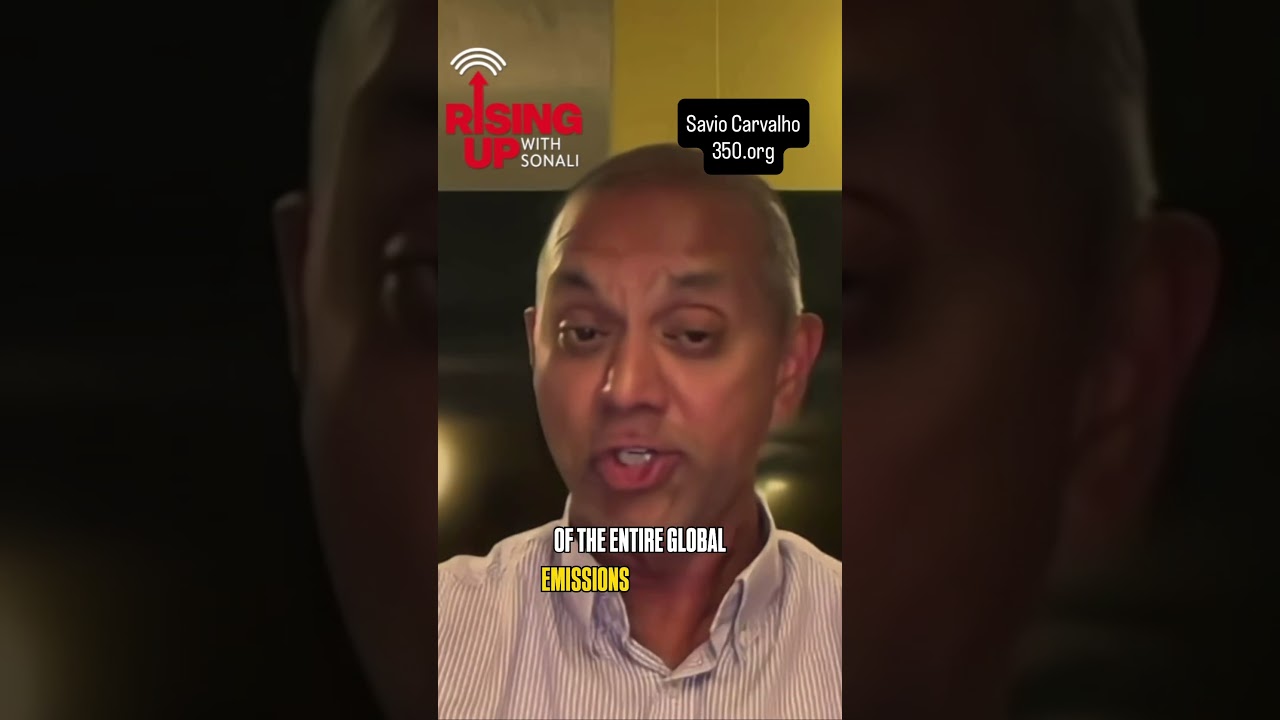
FEATURING SAVIO CARVALHO - Thousands of people in Nepal observed a national day of mourning on Monday to mark the devastation of climate-change-fueled floods that killed more than 1,200 people including a few dozen in neighboring Tibet. More than 5,000 remain missing.
How and why did it happen? According to Grist, “Seven billion cubic feet of glacial ice and rock, enough to fill 100 football stadiums, crashed roughly a mile straight down into the river below. The impact created a muddy wall of water that swept through the valley as fast as 100 miles per hour.”
And just days after Nepal’s disaster struck, the UN Environment Programme published a report claiming that global temperatures had already pushed past the 1.5 degree Celsius limit and that it was time to focus on mitigation and adaptation to an unstable and deadly climate for decades while working to bring global temperatures back down. It was a grim assessment, one that my guest will help make sense of.
Savio Carvalho is Managing Director of Campaigns and Networks at350.org, overseeing the country and global teams driving campaigns to end fossil fuels and advance a just renewable energy transition. Originally from India and based in the Netherlands, he has worked for over two decades across Asia, Africa and Europe with organisations including Amnesty International, Greenpeace International, WaterAid and Oxfam, on issues spanning climate, food systems, water and sanitation, gender and humanitarian response. He spoke with Sonali Kolhatkar about the Nepal floods and UNEP report.
This post is for paying subscribers only
Sign up now and upgrade your account to read the post and get access to the full library of posts for paying subscribers only.