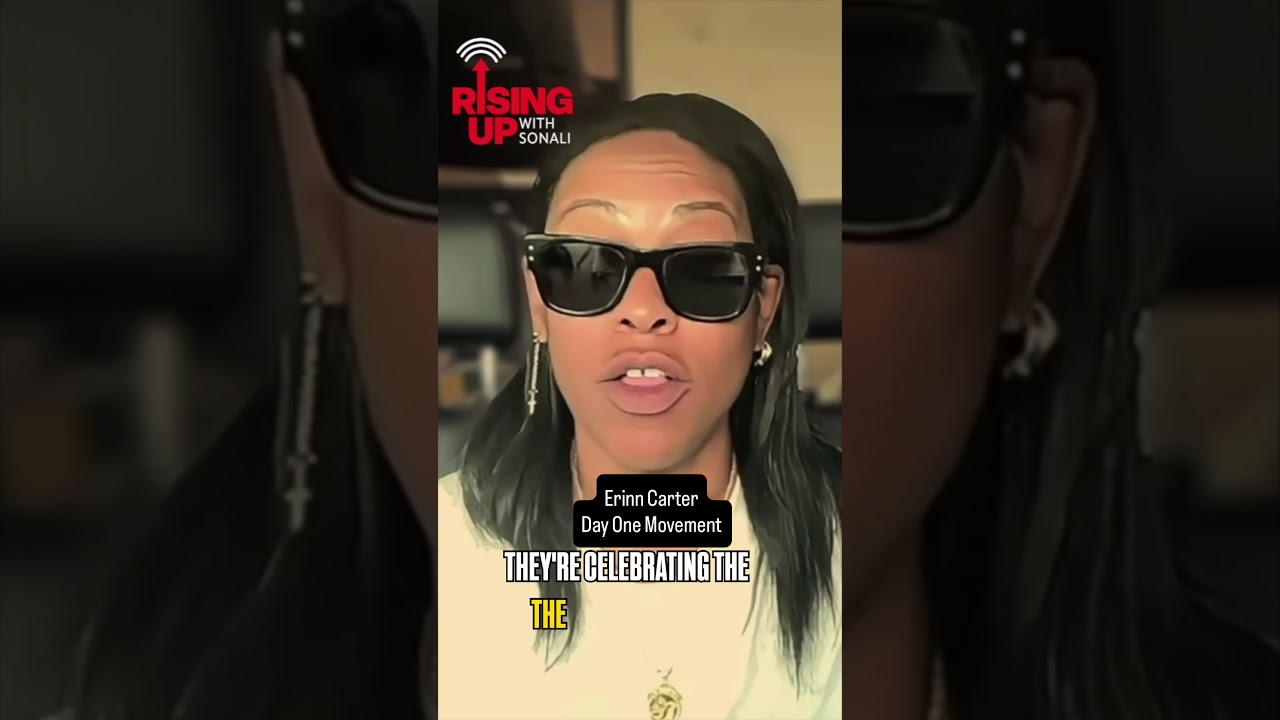
FEATURING ERINN CARTER - This year, the Fourth of July marks the 250th anniversary of the United States. For Indigenous and Black communities it has never symbolized independence. As Donald Trump turns the anniversary into a spectacle of white supremacy, Black and Indigenous activists have launched a new campaign called Day One Movement to uphold what they call a “Bill of Essential Rights.” Erinn Carter is an organizer based in Los Angeles with Day One. She spoke with Sonali Kolhatkar about the campaign.
ROUGH TRANSCRIPT:
Sonali Kolhatkar: What is Day One? It's brand new, and I mentioned the Bill of Essential Rights. Give me the lowdown on this new campaign.
Erinn Carter: Absolutely. I think Day One is a lot of things, but at its core, it's a movement of people. It's a movement of families, of friends, of neighbors, of communities that have committed to a simple promise. And the promise is, is that there's not going to be another 250 years of the same kind of injustice that a lot of Black and indigenous communities, and other communities, have experienced in the United States' history.
So that's really, at its core, what it is. And what we're really focused on is thinking about what the past 250 years have held, and also really just trying to imagine what the next 250 years can be. And a real commitment to each other that whatever the next 250 years in American history is going to be, it's not going to be the same as the past 250 years. So it's a commitment to the future, it's a commitment to acknowledging the past, and it's a commitment, like you said, to really upholding this new Bill of Essential Rights that we think has a lot of application to a lot of communities, not only in the United States, but around the world.
Kolhatkar: And I want to get to that, but this idea that America is a land of... it is basically stolen lands built by stolen hands. Explain that a little bit more and why it's so important that it's a movement led by Black and indigenous communities.
Carter: Well, like you said, the history of the United States is those two things. It's that America is fundamentally a stolen land, and also America fundamentally has been built by stolen hands.
And I think the reason why we have that as one of the key pieces is that it really acknowledges the particular history that both indigenous communities have experienced at the hands of white supremacy, at the hands of what systems of oppression have existed in the United States. And Black communities in particular, the way in which chattel history and the history of chattel slavery has impacted Black communities.
This post is for paying subscribers only
Sign up now and upgrade your account to read the post and get access to the full library of posts for paying subscribers only.