🤩
ENJOY THE LATEST EPISODE OF OUR NEW SERIES, RISING UP FOR JUSTICE. Every Tuesday, Rising Up subscribers get the EXTENDED UNCUT version of the interview airing Mondays on Free Speech TV.
FEATURING EMILY MARTIN - Our nation and our world is overrun by billionaires and bigots, but they are few and we are many. On this series, exclusive to subscribers of Rising Up With Sonali and viewers of Free Speech TV, we’ll hear from organizers in the movements for social justice, and dig into the nuts and bolts of values, strategies, tactics, narratives, and building power.
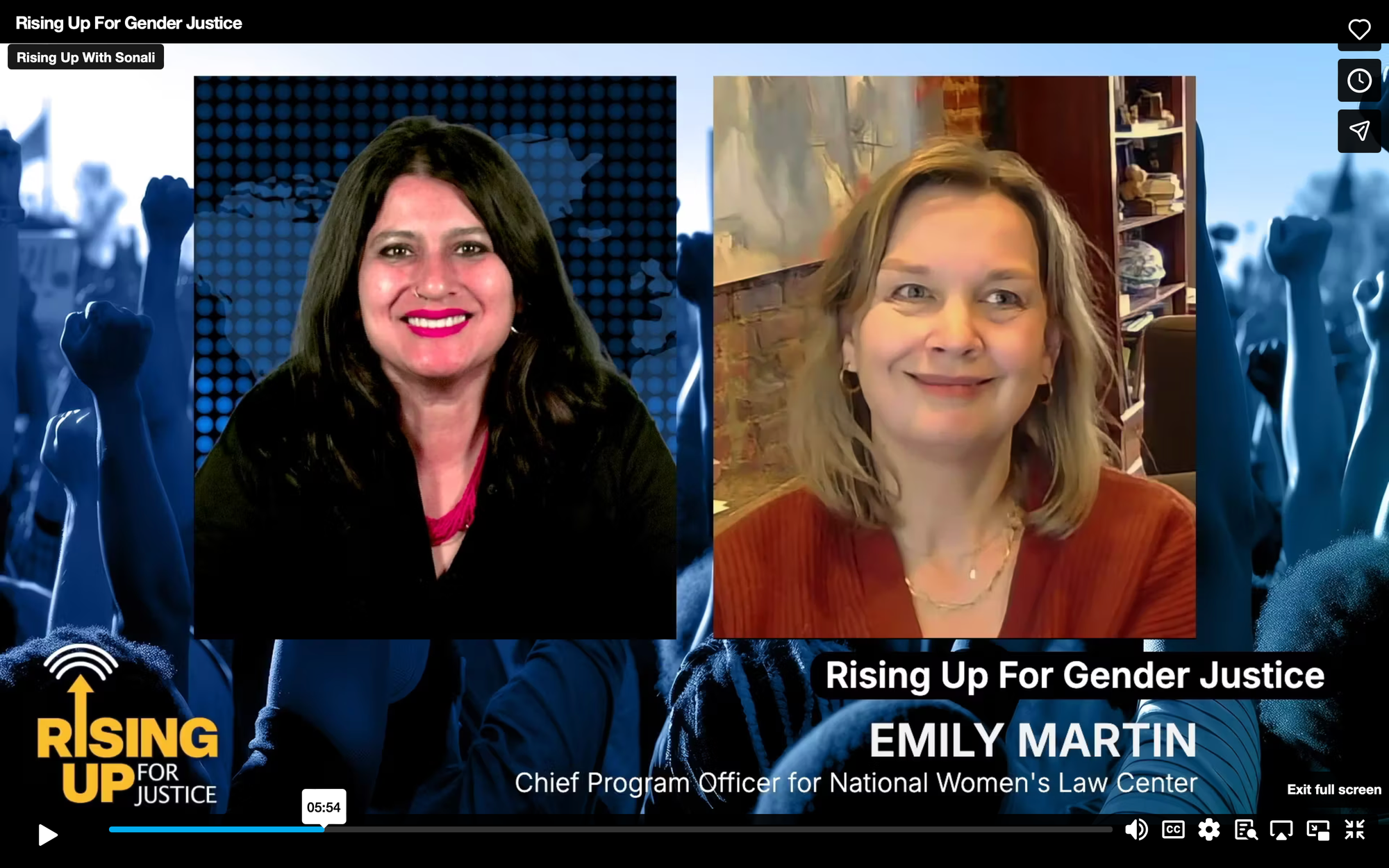
This week on Rising Up for Justice, Emily Martin, Chief Program Officer for the National Women’s Law Center joins us. She leads the development and execution of NWLC’s gender justice priorities, with a particular focus on women and girls of color and LGBTQI+ people. She was previously NWLC’s Vice President for Education & Workplace Justice.
ROUGH TRANSCRIPT:
Sonali Kolhatkar: Tell me first what the goals are of the National Women's Law Center. The name certainly suggests a lot, but looking through your website, it's very broad. So how do you define what your main goals are?
Emily Martin: Well, it's a great question. We are a multi-issue gender justice organization. We're focused on law and policy, but also on narrative change. The issues that we focus on include education, workplace justice, reproductive rights and health, childcare, income security, judicial nominations, and democracy, among other things.
So, a whole bunch of issues that are really key to women and LGBTQ people's ability to make decisions about their lives and to thrive. And we work on those issues, we often say that we use the law in all its forms. We really believe that legal change drives culture change, and culture change drives legal change. We engage with Congress, with state legislatures, with the courts.
And we also do a lot of campaign and communications work, both because that's really important for our ability to advance good policies and fight against bad ones, and because, more broadly, sort of helping to shift and shape how people think about gender, how people think about opportunity. What are the stories that we tell ourselves about women and girls and LGBTQ people? That's also sort of key to our ability to advance gender justice.