🤩
ENJOY THE LATEST EPISODE OF OUR NEW SERIES, RISING UP FOR JUSTICE. Every Tuesday, Rising Up subscribers get the EXTENDED UNCUT version of the interview airing Mondays on Free Speech TV.
FEATURING HANNAH APPEL - Our nation and our world is overrun by billionaires and bigots, but they are few and we are many. On this series, exclusive to subscribers of Rising Up With Sonali and viewers of Free Speech TV, we’ll hear from organizers in the movements for social justice, and dig into the nuts and bolts of values, strategies, tactics, narratives, and building power.
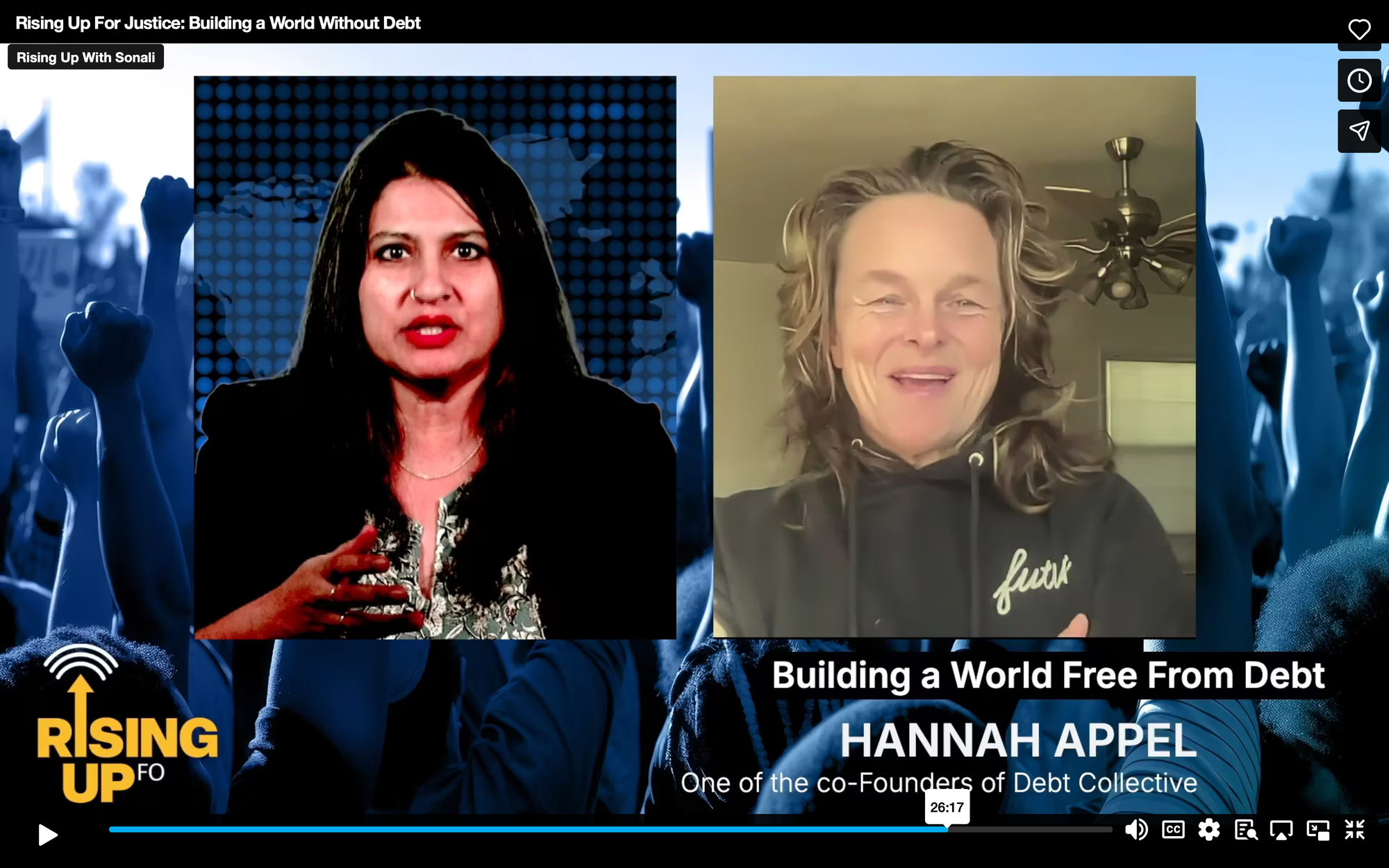
This week, Hannah Appel joins us. She is one of the co-founders of the Debt Collective and teaches economic anthropology at UCLA and is a proud mother of two children.
ROUGH TRANSCRIPT:
Sonali Kolhatkar: Let's talk about Debt Collective and how you summarize the work that your organization has done. I’ve been familiar with the organization for a long time, and in my mind it's most commonly been associated with tackling student debt, which I suspect is how it started. But now it seems as though you've really expanded your vision, your jurisdiction, if you will, to many different kinds of debt. So, tell us about the broad strokes of Debt Collective.
Hannah Appel: Yeah, absolutely. So, the Debt Collective is the nation's first debtors’ union, and we aim to organize debtors to abolish debts and fight for a world in which everything we need to survive and thrive—housing, education, healthcare—is provided to us without going into often disabling, quite literally disabling debt. And we aim to do that through organizing debtors to build debtor power.
But you are absolutely right that we're best known for our work in student debt. And you are also right, that that’s because that's where we've started, right? That's where our movement initially started. First, organizing folks who had attended for-profit colleges, and it's important to know that they, and very few student debtors are actually in debt to those colleges, right? They're in debt to the federal government, but folks who had been defrauded by for-profit colleges. This is back about a decade ago when we started. Those were the first folks we organized with, and the first folks with whom we had some major victories.