🤩
ENJOY THE LATEST EPISODE OF OUR NEW SERIES, RISING UP FOR JUSTICE. Every Tuesday, Rising Up subscribers get the EXTENDED UNCUT version of the interview airing Mondays on Free Speech TV.
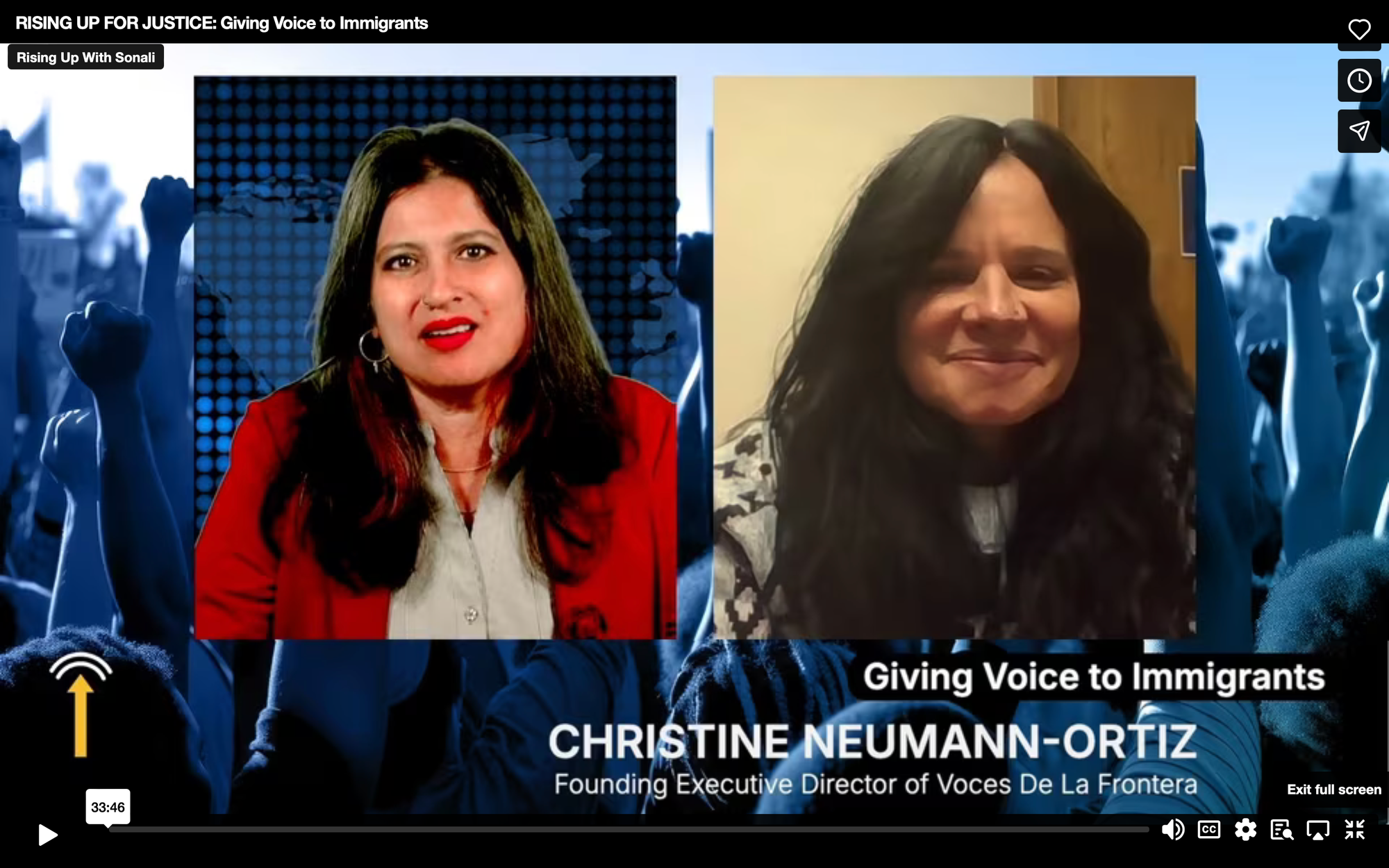
FEATURING CHRISTINE NEUMANN-ORTIZ - Our nation and our world is overrun by billionaires and bigots, but they are few and we are many. On this series, exclusive to subscribers of Rising Up With Sonali and viewers of Free Speech TV, we’ll hear from organizers in the movements for social justice, and dig into the nuts and bolts of values, strategies, tactics, narratives, and building power.
This week, Christine Neumann-Ortiz, founding Executive Director of Voces de la Frontera and Voces de la Frontera Action joins us. She serves on the board of a national coalition of the Fair Immigration Reform Movement and is a national leader in the immigrant rights movement.
ROUGH TRANSCRIPT:
Sonali Kolhatkar: I've spoken to you so many times before on my other show, Rising Up With Sonali. This time we're focusing on your organization rather than all of the scary issues that we usually talk about. Let's talk about Voces itself.
As I mentioned, it's based in Wisconsin, but you have such a national profile now, you've really made the organization one that is a national contender. we think of the big cities like LA and New York and Chicago as being centers of immigrant rights, organizing, but you've really made Wisconsin stand out. How do you summarize the work that Voces de la Frontera does for our audience, including the main issue and your organizational goals?
Christine Neumann-Ortiz: Well yeah, the reference in Spanish is “Voices from the Border” because even though I live in Wisconsin, I had spent time in Texas at the border there and had an opportunity to travel the border for a year and meet workers from the maquiladora industry that were organizing and a tri national coalition that was, building alliances between Canadian, US and Mexican workers, especially at the time of the Free trade agreement when it was being signed in 1994.
And, and even then, at that very beginning stage, you could already see, the kinds of abuses that were taking place in terms of exposure to like the environment with and chemical exposure to workers who went unprotected and just, poverty despite people working and working really hard. And so that became, how people were organizing under those conditions. It really became the inspiration when it came back to Wisconsin to form, kind of a worker center model.