🤩
ENJOY THE LATEST EPISODE OF OUR NEW SERIES, RISING UP FOR JUSTICE. Every Tuesday, Rising Up subscribers get the EXTENDED UNCUT version of the interview airing Mondays on Free Speech TV.
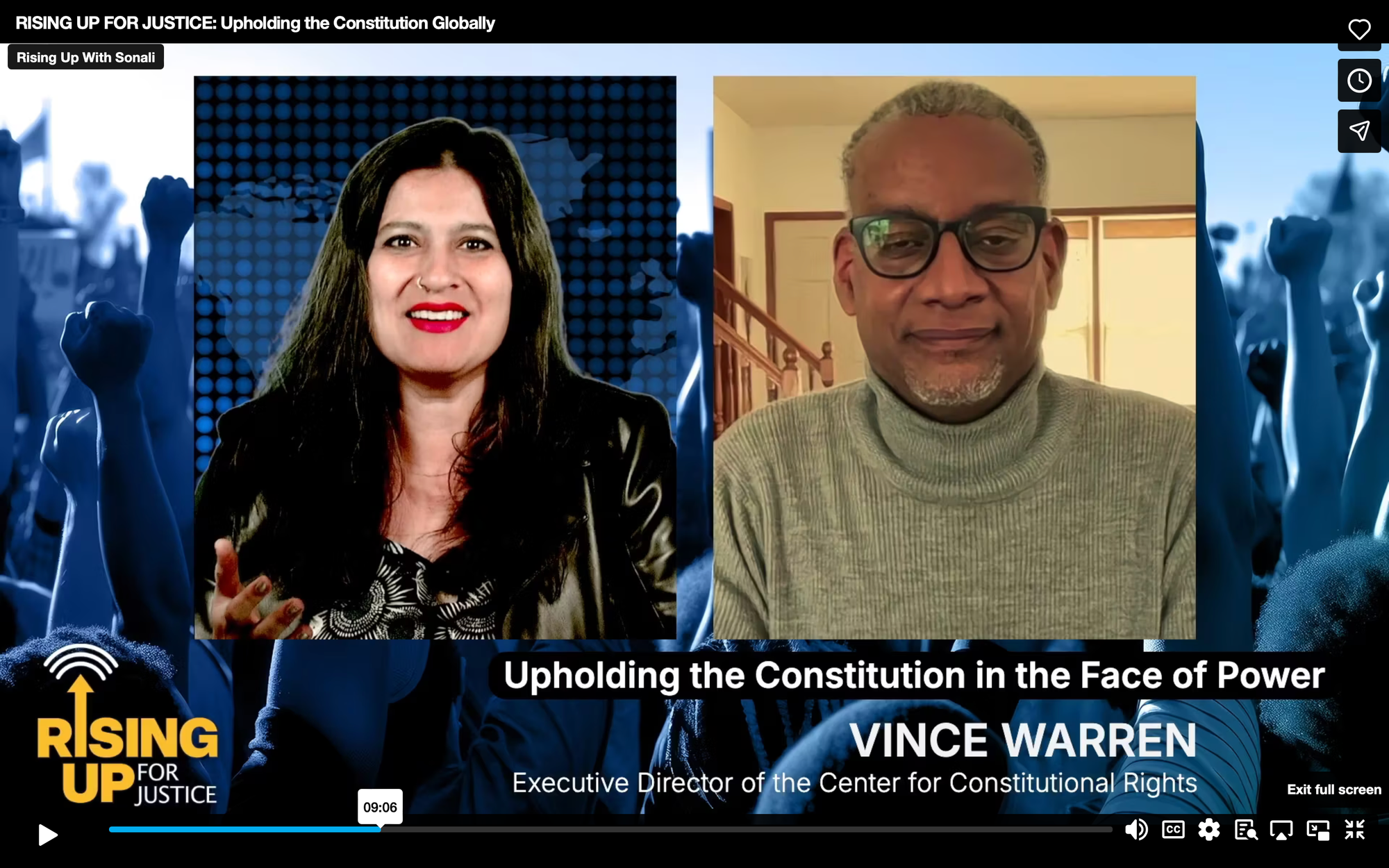
FEATURING VINCE WARREN - Our nation and our world is overrun by billionaires and bigots, but they are few and we are many. On this series, exclusive to subscribers of Rising Up With Sonali and viewers of Free Speech TV, we’ll hear from organizers in the movements for social justice, and dig into the nuts and bolts of values, strategies, tactics, narratives, and building power.
This week on Rising Up for Justice, Vincent Warren, executive director of the Center for Constitutional Rights joins us. He is a leading expert on racial injustice and discriminatory policing and oversees CCR's litigation and advocacy work, using international and domestic law to challenge human rights abuses, including racial, gender and LGBTQIA injustice. He previously monitored South Africa's historic Truth and Reconciliation Commission hearings, and was a senior staff attorney at the ACLU and a criminal defense attorney for the Legal Aid Society in Brooklyn.
ROUGH TRANSCRIPT:
Sonali Kolhatkar: I’ve followed CCR’s work for many, many years, since I was a journalist a couple decades ago, and there've been so many different issues you've worked on. I remember talking to your lawyers around Guantanamo, and of course the work evolves, but how do you summarize what CCR’s main goals are?
Vince Warren: CCR has been around for a lot longer than from when you were a journalist or even an astrophysicist. We started in 1956, so this year is our 60th year in existence, and CCR is a legal and advocacy organization that works with communities under threat to be able to move them towards a path of liberation.
And when you hear the name Center for Constitutional Rights, you would think that we only do constitutional rights and we actually don't.
What we do is that we infuse both, the constitutional rights as well as international human rights and international human rights principles into our litigation and advocacy.
So, we believe that if you have a lawyer, an activist and a storyteller, you can change the world. And so, we work with lawyers, we work with community and movement groups, we work with storytellers, and the litigation is very bold, it's innovative, it's experimental in some ways. The advocacy work is about building power in communities so that they can make the change that they wanna see. And our work with storytellers and our strategic communications is really designed about reframing from state power narratives to framing towards people's narratives: What are the people actually experiencing? What are they actually going through as opposed to what the government is saying is happening.